Leave Your Message

2026 Top Wire Bonder Machine Buying Guide

Choosing a Wire Bonder Machine in 2026 requires more than comparing prices and advertised cycle times. Semiconductor packaging teams must match equipment performance with real production conditions, materials, and quality targets. A machine that bonds gold wire smoothly may not handle copper wire with equal stability. Small differences matter.

This guide examines the practical factors that influence a reliable purchase. It considers bonding accuracy, ultrasonic control, loop formation, wire diameter, substrate types, and process repeatability. It also reviews automation, vision alignment, software usability, maintenance access, and operator training. These details affect daily output more than impressive showroom demonstrations. Ask for production samples.

Experienced buyers should request documented test results under comparable conditions. A supplier should explain bond strength, failure rates, calibration intervals, and spare-part availability. Independent inspection and sample validation can reveal problems hidden by polished presentations. Service response time also deserves careful attention, especially when one stopped machine can delay an entire packaging line.

No single machine fits every factory. That is worth remembering. A high-speed model may create unnecessary complexity for low-volume production. Conversely, a cheaper system may become expensive through frequent adjustments, material waste, or limited technical support. Vendor claims require verification, not blind trust. This guide therefore balances specifications with hands-on concerns, including installation space, operator workflow, environmental controls, and long-term ownership costs. Some recommendations may change as your package designs evolve. Recheck them before signing a purchase agreement.
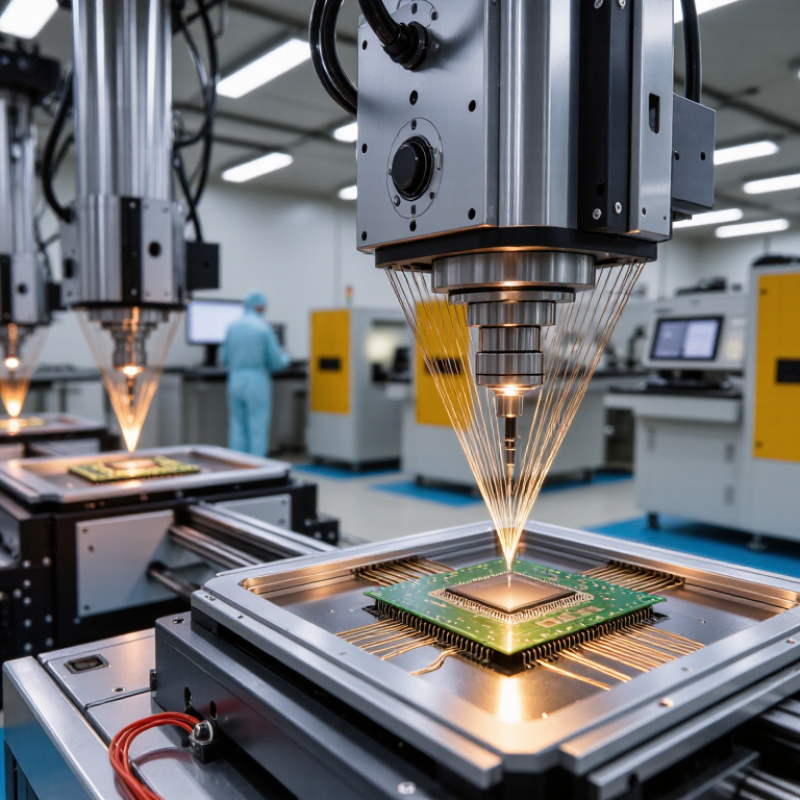
2026 Top Wire Bonder Machine Buying Guide

Wire Bonder Machine Fundamentals and Core Bonding Technologies

2026 Top Wire Bonder Machine Buying Guide

Wire Bonder Machine Fundamentals and Core Bonding Technologies

A wire bonder connects semiconductor dies to packages through controlled wire loops. The process depends on heat, pressure, ultrasonic energy, and accurate motion. A typical cycle forms a first bond, creates a loop, and completes the second bond. Gold, copper, and aluminum wires each require different settings. Wire diameter also affects loop height, resistance, and bond strength.

Ball bonding uses a heated ball and a capillary tool. It suits many fine-pitch packaging applications.

Wedge bonding uses shaped clamps and ultrasonic energy. It performs well with aluminum wire, heavy wire, and larger power devices.

Thermosonic bonding combines heat and ultrasonic vibration. It can reduce required force, but unstable temperature control may damage sensitive structures.

During machine selection

During machine selection, inspect bond pull data, shear results, placement accuracy, and cycle consistency. Ask for sample trials using your actual die, substrate, and wire. Check tool-change time, recipe control, vision performance, and maintenance access. A fast machine is not automatically productive. Poor wire feeding can create repeated stoppages.

Practical experience

Practical experience shows that cleanliness matters more than many buyers expect. Dust on a bonding surface can ruin an otherwise correct recipe. No machine wins every package. Process development may require several imperfect trials before stable results appear. Engineers should record failed bonds, not hide them, because those records often reveal the real process limit.
Key Specifications for Comparing Wire Bonder Machines

When comparing wire bonder machines, start with application fit, not catalog speed. SEMI’s 2024 World Fab Forecast projected global fab capacity growth of about 6%, increasing pressure on packaging throughput. A practical comparison should record UPH, bond placement accuracy, wire diameter range, loop height control, and supported package sizes. Speed is not everything. A machine rated at 20 bonds per second may perform poorly with frequent recipe changes or difficult materials.

Bond force and ultrasonic power deserve close inspection. Ask for process windows, not single headline values. Stable bonding should withstand pull and shear testing across temperature and humidity changes. Vision accuracy matters near fine-pitch pads, where a few microns can affect yield. SEMI E10 provides a useful framework for separating availability, performance, and quality when calculating equipment effectiveness. Request measured results from production-like samples, including stoppages, rework, and setup time.

Heating control, capillary life, software traceability, and operator access also influence ownership cost. Reports from Yole Group on advanced packaging continue to highlight tighter interconnect requirements, but not every factory needs the most advanced platform. That is where buyers can over-specify. I would compare three recipes, two wire types, and one full-shift trial before deciding. Test evidence is more reliable than a polished demonstration. One overlooked detail: spare-part lead time. A precise bonder is still unproductive when a critical sensor waits weeks.

How to Match a Wire Bonder to Your Production Requirements

2026 Top Wire Bonder Machine Buying Guide

How to Match a Wire Bonder to Your Production Requirements

Matching a wire bonder starts with the package, not the machine’s advertised speed. Record wire material, diameter, loop height, bond pitch, and substrate type. A fine-pitch sensor package may need far tighter motion control than a power module. Small differences matter.

Review your daily output and peak demand separately. A line producing 8,000 units per day may require a 15,000-unit capacity. This margin supports maintenance and unexpected rework. However, buying the fastest platform can waste money if operators cannot sustain its settings. Check bond force control, ultrasonic frequency, capillary access, and recipe stability. Ask for sample bonding with your actual materials. Clean pull-test data is more useful than a polished brochure.

The production floor also decides the right machine. Measure available space, service access, exhaust needs, and operator reach. Confirm software traceability, alarm history, training, and spare-part availability. A machine that performs well in a laboratory may struggle beside vibration, dust, or temperature changes. That weakness is easy to overlook. Plan a pilot run lasting several shifts, not just a short demonstration. Record first-pass yield, setup time, wire break frequency, and adjustment count. Some requirements will change after testing. That is normal. Leave room for that lesson.

2026 Top Wire Bonder Machine Buying Guide - How to Match a Wire Bonder to Your Production Requirements

Use the production profile, wire material, package format, throughput target, and automation requirements to identify the most suitable wire bonder configuration.

Wire Bonder Category Typical Wire Diameter Common Wire Materials Typical Throughput Typical Bond Accuracy Suitable Package or Product Recommended Production Volume Key Selection Factors
Manual Ball Bonder 15–50 µm Gold, copper, silver-alloy wire Approximately 100–400 wires per hour Typically ±5–15 µm, depending on operator skill and setup Engineering samples, prototypes, laboratory devices, and small semiconductor packages Low-volume or highly variable production Low initial investment, operator flexibility, simple changeover, and ease of process development
Semi-Automatic Ball Bonder 15–50 µm Gold, copper, silver-alloy wire Approximately 300–1,000 wires per hour Typically ±3–10 µm Prototype batches, sensor packages, optoelectronic devices, and specialty components Low-to-medium volume Balance between operator control and repeatability; verify stage travel, pattern memory, and bonding-force control
Automatic Ball Bonder 15–50 µm Gold, copper, silver-alloy wire Approximately 1,000–3,500 wires per hour Typically ±2–5 µm Integrated circuits, discrete semiconductors, LEDs, sensors, and standard microelectronic packages Medium-to-high volume Automatic alignment, vision capability, recipe management, low wire breakage, and stable bonding parameters
Fine-Pitch Ball Bonder 12–30 µm Gold, copper, silver-alloy wire Approximately 1,500–4,000 wires per hour Typically ±1–3 µm Fine-pitch integrated circuits, advanced sensors, RF modules, and compact packages Medium-to-high volume with tight geometric tolerances High-resolution vision, controlled loop formation, low vibration, precise capillary alignment, and fine-pitch process capability
Heavy-Wire Wedge Bonder 75–500 µm Aluminum, copper, and aluminum-coated wire Approximately 100–800 wires per hour Typically ±10–30 µm Power modules, automotive electronics, batteries, high-current devices, and industrial components Medium-to-high volume for power applications Bonding force, ultrasonic power, clamping capacity, heat management, wire spool size, and pull-strength capability
Fine-Wire Wedge Bonder 12–75 µm Aluminum, gold, copper, and silver-alloy wire Approximately 800–2,500 wires per hour Typically ±2–8 µm LEDs, MEMS, sensors, hybrid circuits, and fine-pitch semiconductor packages Medium-volume specialty production Wire-feed stability, wedge geometry, loop control, ultrasonic energy consistency, and access to narrow bond pads
Ribbon Bonder Ribbon widths of approximately 100–600 µm; thickness commonly 12–50 µm Aluminum, copper, and gold ribbon Approximately 100–700 bonds per hour Typically ±10–30 µm Power semiconductors, LED packages, automotive modules, and high-current interconnects Medium-to-high volume power production Ribbon width and thickness, bond-footprint design, current-carrying requirements, thermal cycling, and peel strength
Ultrasonic Wedge Bonder Approximately 18–500 µm Aluminum, copper, gold, and silver-alloy wire Approximately 300–2,000 wires per hour Typically ±3–15 µm Power electronics, RF devices, MEMS, sensors, and packages with non-ball-bondable surfaces Low-to-high volume, depending on configuration Ultrasonic frequency, force range, bond-pad metallurgy, tool access, wire hardness, and substrate temperature
Thermosonic Bonder Approximately 15–50 µm Gold, copper, and silver-alloy wire Approximately 800–3,500 wires per hour Typically ±2–8 µm ICs, optoelectronic components, sensors, and miniature electronic packages Medium-to-high volume Combined heat, pressure, and ultrasonic control; check substrate temperature limits and intermetallic reliability
High-Speed Automatic Bonder Approximately 15–50 µm Gold, copper, and silver-alloy wire Approximately 2,500–6,000 wires per hour Typically ±1–4 µm High-volume semiconductor, LED, sensor, and consumer-electronics packages High-volume continuous production Cycle time, machine uptime, automatic wire threading, recipe control, vision speed, feeder reliability, and preventive maintenance
Die-Attach and Wire-Bonding Cell Usually 15–500 µm, depending on the integrated bonder Gold, aluminum, copper, and ribbon Approximately 300–2,500 wires per hour Typically ±3–20 µm Power modules, automotive assemblies, hybrid modules, and multi-step packaged devices Medium-to-high volume with multiple process steps Footprint, process integration, material handling, traceability, recipe transfer, inspection, and line balancing

Buying note: Actual throughput and accuracy vary with wire diameter, bond pattern, package design, substrate temperature, operator experience, inspection requirements, and machine configuration. Request a process demonstration using your own package, wire, and target cycle time before purchase.

Automation, Materials, and Compatibility Considerations

2026 Top Wire Bonder Machine Buying Guide

Automation, Materials, and Compatibility Considerations

A wire bonder should match your process, not simply advertise high speed. In production reviews, I check indexing accuracy, vision response, wire tension, and alarm handling. Stable automation reduces operator intervention during long shifts. It also exposes weak process settings quickly. Good systems record bond force, ultrasonic power, temperature, and recipe changes. These records support traceability and practical troubleshooting.

Material selection changes the machine requirements. Gold wire is forgiving, while copper needs tighter control of heat, force, and surface condition. Aluminum wire may require different tooling and bonding energy. Capillary geometry matters too. A small mismatch can create crushed wire, poor loops, or inconsistent bond footprints. Inspect sample bonds with pull tests and shear tests. Do not rely on appearance alone. A shiny bond can still fail.

Compatibility deserves a physical checklist. Confirm die sizes, lead frames, substrates, package heights, wire diameters, and clamp clearances. Review communication protocols with existing handling equipment. Check whether recipes can transfer securely between engineering and production stations. Ask for trials using your actual materials, including aged or slightly warped parts. That detail often reveals problems early. I have seen teams choose impressive automation and overlook maintenance access. It became expensive later. A realistic evaluation should include nozzle changes, capillary replacement, cleaning time, software training, and spare-part availability. No machine is perfect. Your process data should guide the compromise.

Cost, Supplier Evaluation, and Purchasing Checklist

2026 Top Wire Bonder Machine Buying Guide: Cost, Supplier Evaluation, and Purchasing Checklist

Cost planning must include more than the machine quote. A production-ready wire bonder may require tooling, ultrasonic transducers, software licenses, installation, training, and spare capillaries. A practical budget review should separate capital cost from three-year ownership cost. Yole Group’s 2024 Status of Advanced Packaging report values the advanced packaging market at approximately 46 billion US dollars in 2023. That growth increases equipment demand, but it does not guarantee fast payback. Run a sample calculation using bonding speed, yield, labor, maintenance, and actual monthly utilization. The spreadsheet may expose uncomfortable assumptions.

Supplier evaluation should begin with verified process evidence. Request bonding trials using your package, wire diameter, substrate, and target loop profile. Check pull-test results, shear strength, stitch consistency, placement accuracy, and alarms after extended operation. SEMI’s 2024 World Fab Forecast projected global semiconductor manufacturing equipment spending above 100 billion US dollars, showing a competitive investment environment. However, a large market does not prove one supplier fits your process. Ask for spare-part lead times, software support, calibration procedures, training records, and local service coverage. Speak with two existing users, if possible. Their maintenance experience may differ from the sales presentation.

Your purchasing checklist should record machine cycle time, supported wire materials, maximum bond area, changeover time, vision capability, utility requirements, warranty limits, and acceptance-test criteria. Include export documentation and workplace safety compliance. Do not overlook operator ergonomics. A technically capable machine can still underperform when setup is slow or training is weak. Recheck every number before signing. Mistakes are expensive.

2026 Top Wire Bonder Machine Buying Guide

Cost, supplier evaluation, and purchasing checklist

Indicative 2026 market ranges in USD for new equipment. Actual pricing varies with bond head configuration, workholder size, automation, software, inspection options, installation, and regional service requirements.

Supplier Evaluation

  • Process capability for wire diameter, pad pitch, loop height, and package type
  • Demonstrated bonding yield and repeatability using your production materials
  • Local field service, response time, spare-parts availability, and training
  • Software integration with traceability, recipe control, and factory systems

Purchasing Checklist

  • Request a sample-bond evaluation and documented capability report
  • Compare total cost of ownership, not only the equipment quotation
  • Confirm installation, acceptance testing, warranty, and operator training
  • Verify consumable compatibility, upgrade paths, and expected delivery time