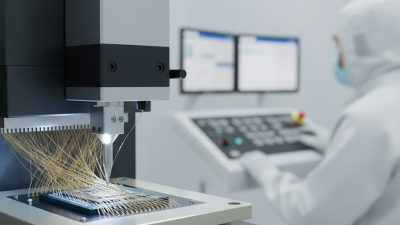
China’s semiconductor packaging sector is expanding, and Automatic Wire Bonder equipment remains important for connecting chips, lead frames, and substrates. SEMI’s World Fab Forecast reports continued investment in Chinese semiconductor manufacturing capacity, although investment levels vary by application and technology. This growth creates demand for reliable wire bonders, especially in power devices, LEDs, sensors, and mature-node integrated circuits.
This guide examines China’s leading suppliers through practical engineering criteria. These include bonding speed, placement accuracy, ultrasonic control, loop stability, software capability, and long-term service support. A machine may look impressive during a factory demonstration. Real performance appears after thousands of bonding cycles. Wire diameter, package design, operator training, and maintenance quality also affect results.
Reports from Yole Group and TechInsights have highlighted the growing importance of advanced packaging, heterogeneous integration, and regional supply-chain development. However, these reports do not automatically identify the best equipment supplier for every factory. Rankings need context. A high-volume LED producer may value throughput, while a power semiconductor manufacturer may prioritize bond strength and process repeatability. That difference matters.
Supplier claims should therefore be checked against process samples, customer references, warranty terms, spare-part availability, and local technical response. Ask for measurable data. Look beyond brochures. Some comparisons remain imperfect because suppliers disclose different testing conditions. This article introduces notable Chinese Automatic Wire Bonder manufacturers and explains how buyers can compare them more responsibly, using evidence rather than promotional language.
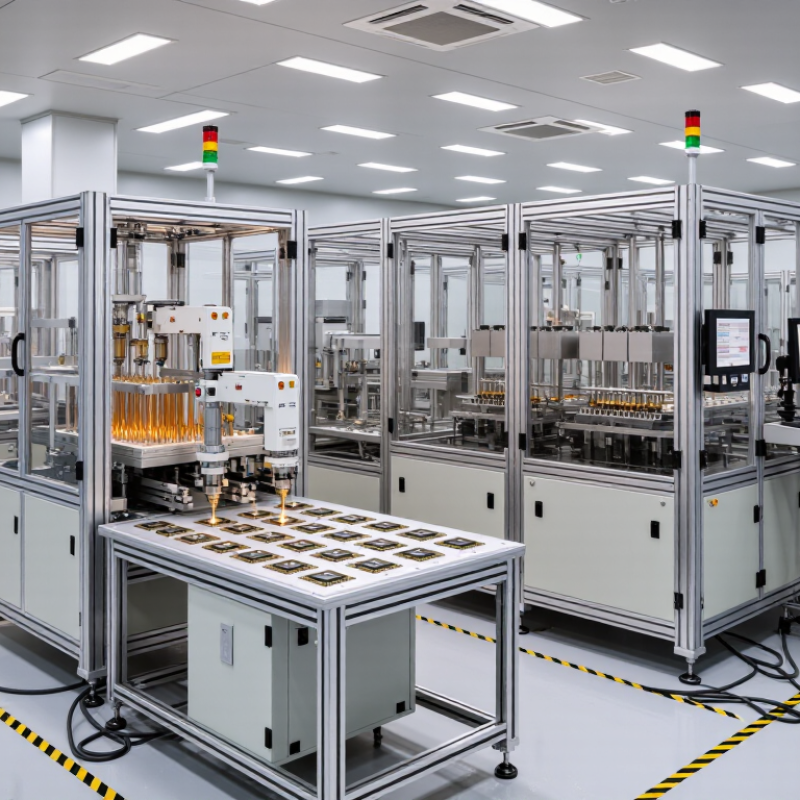
Automatic wire bonders connect semiconductor dies to package leads or substrates using fine gold, copper, or aluminum wire. The machine controls bonding force, ultrasonic energy, loop height, and wire length with micrometer-level precision. It can perform ball bonding or wedge bonding at high speed.
Its main functions include die recognition, automatic alignment, wire feeding, bonding, inspection, and error detection. These systems support memory chips, power modules, sensors, LEDs, and automotive electronics. WSTS projected the global semiconductor market to reach 611.2 billion US dollars in 2024 and 687.4 billion US dollars in 2025. This growth increases demand for stable packaging equipment, although not every product requires the same bonding method. Power devices often need thicker wire, while compact sensors demand smaller loops and tighter placement accuracy.
Tips: Check bonding speed, wire diameter range, machine uptime, software traceability, and service response. Ask for sample bonding data using your actual package. A factory demo can reveal defects that brochures hide. Also inspect operator training and spare-part availability. These details are easy to overlook. Supplier evaluation should include long-term process support, not only purchase price. SEMI’s equipment outlook also shows continued investment in semiconductor manufacturing, but market forecasts can change quickly. Therefore, buyers should test real production conditions before making a final decision.
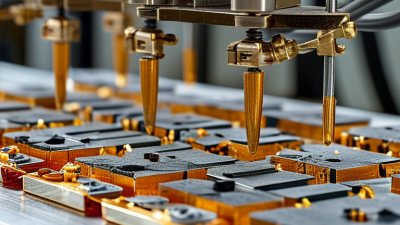
Choosing an automatic wire bonder supplier requires more than comparing machine prices. SEMI’s 2024 data shows global semiconductor manufacturing capacity continued expanding, increasing pressure on assembly equipment reliability. A supplier should provide stable bonding speed, repeatable loop height, and low wire breakage. Ask for measured results, not broad claims. Request sample data from packages similar to yours, including fine-pitch and multi-layer applications.
Technical support is equally important. Check whether engineers can visit your factory, analyze bond pull results, and respond during production interruptions. ISO 9001 certification supports process discipline, but it does not guarantee excellent equipment. Review calibration records, software change controls, spare-part availability, and preventive-maintenance schedules. Industry analyses from Yole Group continue to highlight advanced packaging growth, yet traditional wire bonding remains practical for many power, sensor, and memory packages. The correct supplier must understand both cost and application limits.
Tips: Test at least three sample lots before signing. Measure first-pass yield, cycle time, alignment accuracy, and operator training hours. A useful trial should include difficult materials, not only ideal samples. Ask for a written service-response target and five-year parts plan. Price still matters, but it can mislead. I would not rely on a polished demonstration alone; factory-floor evidence is stronger. Also, suppliers should explain known failure modes openly. That honesty is imperfect, but it often reveals more engineering maturity than a perfect sales presentation.
China-based automatic wire bonder suppliers are gaining attention as packaging demand expands. SEMI reported that China’s semiconductor manufacturing equipment sales reached about US$49.1 billion in 2024. That represented roughly 35% of global sales. This figure covers all equipment, not wire bonders specifically. Still, it shows a large local customer base.
A 2024 Grand View Research assessment valued the global wire bonding machine market at more than US$1 billion. The report also expects steady growth through the decade. Buyers should examine more than quoted machine prices. Key checks include bonding accuracy, ultrasonic stability, loop-height control, capillary life, and verified units per hour. Ask for yield data from comparable packages.
Practical testing matters.
Leading China-based automatic wire bonder suppliers should provide sample bonding on your actual leadframes or substrates. Inspect wire pull strength, ball shear results, stitch consistency, and changeover time. Technical teams should also review software traceability and spare-part availability. Some supplier claims remain difficult to compare because testing conditions differ. That is an imperfect area. A factory visit, production trial, and clearly written acceptance criteria can reduce this risk.EIF
Typical bonding-wire diameter ranges used in semiconductor and electronic-device assembly. These industry ranges are provided for technical comparison only and do not represent any specific company or brand.
China’s automatic wire bonder suppliers offer different strengths in equipment design, process control, and technical support. A useful comparison starts with package requirements, not catalogue speed. Check bonding accuracy, loop control, bond force stability, and vision alignment under continuous production. Ball bonders suit many microelectronic packages, while wedge bonders can handle selected power and high-reliability applications. Copper wire may reduce material cost, but it often demands tighter control of surface conditions and bonding parameters.
Technology differences appear during real process trials. Ask suppliers to demonstrate fine-pitch bonding, recipe switching, automatic wire threading, and defect recognition using your actual materials. Inspect the software interface carefully. Operators need clear alarms, traceable parameter records, and protected access levels. A fast machine can still create costly rework. That figure may mislead. Evaluate throughput with inspection, setup changes, and planned maintenance included. Some suppliers provide strong automation, yet their data integration may require extra engineering.
Service capability deserves equal attention. Reliable suppliers should offer factory acceptance testing, installation guidance, operator training, remote diagnostics, and local spare-parts planning. Request documented response times and references from comparable production lines. Review calibration procedures and software update controls. In my view, a supplier’s willingness to discuss failure modes reveals more than a polished demonstration. No supplier is perfect. Communication gaps can still appear after delivery, especially when technical terms differ. A practical scorecard should compare uptime evidence, training depth, warranty terms, process development support, and long-term maintenance costs.
| Capability Tier | Equipment Configuration | Supported Bonding Technology | Typical Wire Range | Typical Applications | Productivity Reference | Automation and Control | Service Capability |
|---|---|---|---|---|---|---|---|
| High-End Fine-Wire Platform | Fully automatic bonder with high-speed XY table, automatic work-holder handling, precision vision alignment, and programmable bonding head. | Ultrasonic wedge bonding Thermosonic ball bonding Copper wire support | Approximately 15–75 µm for fine-wire configurations, depending on the bonding head and process package. | LED packages, semiconductor devices, sensors, optoelectronic components, and fine-pitch microelectronics. | Commonly specified at up to approximately 8–15 wires per second under optimized production conditions. | Recipe management, automatic pattern recognition, bond-force monitoring, statistical process data, and production traceability. | Factory application engineering, remote diagnostics, process development, operator training, and preventive-maintenance programs. |
| Advanced Ball Bonder | Automatic ball bonder with electronic flame-off control, programmable loop shaping, multi-level search, and precision lead-frame positioning. | Gold ball bonding Copper ball bonding Low-loop bonding | Approximately 15–50 µm for common fine-wire packages; larger diameters may be available with a dedicated capillary and bonding kit. | IC and discrete semiconductor packages, power management devices, memory components, sensors, and consumer electronics. | Typical production capability is approximately 6–12 wires per second, depending on loop profile, wire material, and package complexity. | Automatic vision alignment, programmable bond parameters, recipe access control, alarm history, and optional MES data integration. | Installation support, process qualification, spare-part supply, online troubleshooting, and application support for gold or copper wire. |
| High-Throughput Wedge Bonder | Automatic wedge bonder designed for repetitive production, with high-speed indexing, programmable bond trajectories, and robust clamping. | Aluminum wedge bonding Copper wedge bonding Ribbon bonding | Approximately 18–500 µm for round wire; ribbon capability depends on wedge geometry and the selected bonding package. | Power semiconductors, automotive modules, photovoltaic components, battery systems, ceramic substrates, and high-current devices. | Commonly optimized for 2–8 wires per second, with productivity strongly influenced by wire diameter, bond length, and substrate layout. | Automatic substrate recognition, programmable stitch patterns, bond-height control, ultrasonic energy adjustment, and process alarms. | On-site commissioning, tooling selection, wire-process trials, maintenance training, and support for high-current interconnect applications. |
| Heavy-Wire Power Electronics Platform | Heavy-wire automatic bonder with reinforced bonding head, high-force ultrasonic system, rigid work table, and large-substrate handling. | Heavy aluminum wire Heavy copper wire Parallel bonding | Approximately 100–500 µm round wire, subject to the transducer, wedge, bonding force, and workpiece design. | IGBT and MOSFET modules, electric-vehicle power units, industrial drives, renewable-energy inverters, and battery-management assemblies. | Usually measured by bond cycle and wire length rather than high wire-per-second speed; optimized systems can deliver stable repetitive bonding for large wire sizes. | Force and ultrasonic-energy control, programmable bond profiles, substrate mapping, recipe locking, and quality-data recording. | Application testing, destructive and non-destructive bond evaluation guidance, tooling support, operator training, and long-term service contracts. |
| Flexible Mid-Range Production Bonder | Modular automatic platform with interchangeable bonding heads, adjustable work-holder formats, vision alignment, and configurable software. | Ball bonding Fine-wire wedge bonding Small-batch production | Approximately 18–125 µm, depending on the installed bonding head and tool package. | R&D laboratories, pilot production, LED assemblies, sensors, small semiconductor packages, and contract manufacturing. | Approximately 3–10 wires per second in typical production setups; changeover time depends on fixture and recipe design. | Recipe storage, manual or automatic alignment modes, programmable bond sequences, password permissions, and basic production reporting. | Remote commissioning, standard spare parts, video-based troubleshooting, application samples, and technical documentation in English or Chinese. |
| Entry-Level Automatic Platform | Compact automatic bonder with a simplified motion system, standard vision camera, manual loading, and a limited number of programmable axes. | Basic ball bonding Basic wedge bonding | Approximately 18–75 µm for common laboratory and light-production configurations. | Technical colleges, laboratories, prototype production, repair operations, and low-volume electronic assembly. | Approximately 1–5 wires per second, depending on package geometry, operator loading, and bond sequence complexity. | Basic vision alignment, teach-and-repeat programming, parameter storage, manual adjustment, and standard alarm prompts. | Initial installation guidance, operating manuals, remote technical support, basic training, and replacement tooling availability. |
| Customized Turnkey Bonding Cell | Automatic bonder integrated with loading and unloading modules, custom fixtures, pre-bond cleaning, inspection, marking, and data systems. | Ball bonding Wedge bonding Integrated inspection | Usually configured within approximately 15–500 µm according to the selected process head and application requirements. | Automotive electronics, high-reliability modules, mass production, battery assemblies, and products requiring traceable quality records. | Line output is application-specific and is normally determined by takt time, loading method, inspection requirements, and the number of bonding stations. | PLC and industrial-network integration, barcode or QR-code tracking, MES connectivity, automatic inspection, recipe control, and remote monitoring. | Project engineering, factory acceptance testing, site acceptance testing, process validation, production ramp-up, and scheduled after-sales support. |
Choosing among China’s automatic wire bonder suppliers requires more than comparing catalog prices. Start with your package type, wire diameter, bond pitch, throughput target, and materials. A machine proven on 25 µm gold wire may behave differently with copper or fine-pitch aluminum. Ask for recorded trial data, not only showroom demonstrations. Check bond pull and shear results, placement accuracy, cycle time, and uptime over several shifts. Request sample boards from your production line. Small details often expose large risks.
Supplier reliability also depends on engineering support. Confirm installation training, software updates, spare-part availability, calibration procedures, and response times. A clear service agreement matters when one failed clamp stops a shift. Review quality records and request references from similar package types. Do not accept vague claims about “high precision.” Define measurable limits in the purchase contract. I may be overly cautious, but an impressive demo can hide difficult maintenance.
Tips: Test the machine with your real materials. Measure results across multiple shifts. Inspect wire feeding, vision alignment, and bonding consistency. Ask who handles urgent repairs. Also, calculate total ownership cost, including tooling, training, downtime, and replacement parts. A lower purchase price is not always cheaper.