Leave Your Message

How to Choose Needle Holders in 2026?

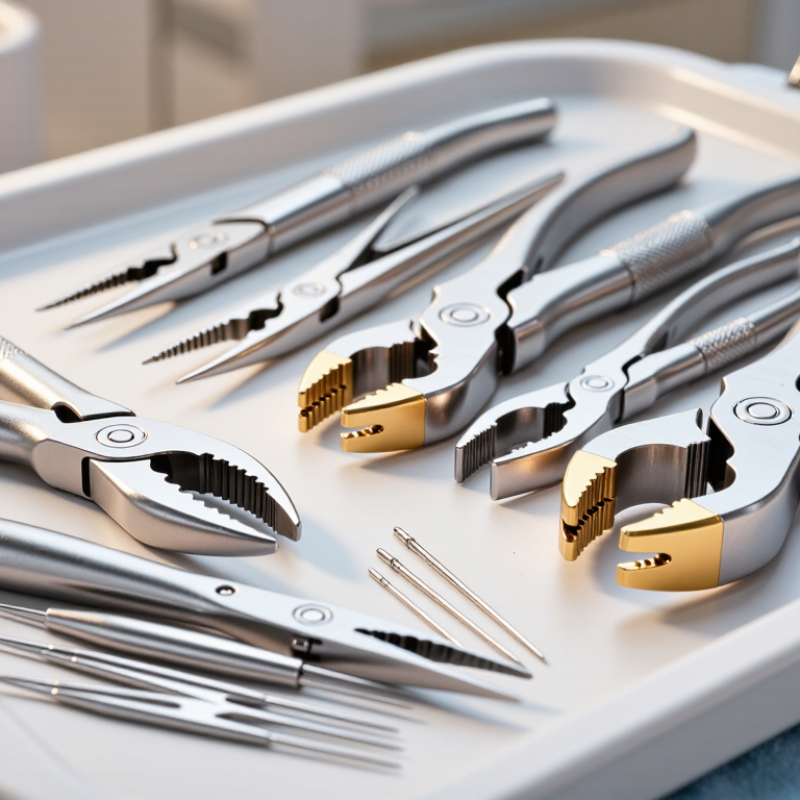
Choosing the right Needle Holders in 2026 requires more than comparing prices, brands, or polished product photographs. Surgeons and medical teams must examine jaw design, handle balance, locking strength, sterilization compatibility, and the needle sizes used daily. A narrow, delicate holder may support fine vascular work, while a stronger model may perform better with thicker needles and dense tissue.

Small details matter. The grip should feel controlled, not forced. The ratchet should close smoothly without trapping the needle too tightly. Tungsten carbide inserts can improve durability, but they may also increase cost. This trade-off deserves attention. A cheaper instrument can become expensive when its jaws misalign or its grip weakens after repeated sterilization.

William Stewart Halsted, a major figure in modern surgery, is often credited with saying, “The surgeon who uses his hands as if they were made of steel will never be a good surgeon.” His principle remains relevant when evaluating Needle Holders. Instrument sensitivity affects accuracy, fatigue, and tissue handling. In practice, no single holder suits every procedure. Even experienced clinicians may choose differently after testing the same model under real operating conditions.

This guide, “How to Choose Needle Holders in 2026?”, considers practical performance, material quality, ergonomic design, maintenance, and purchasing reliability. It also questions common assumptions. The most expensive holder is not automatically the best. The lightest one may not provide enough control. Careful selection begins with the procedure, the needle, and the user’s hand.
How to Choose Needle Holders in 2026?

Needle Holders: Definition, Purpose, and Surgical Applications

Needle holders are specialized surgical instruments used to grasp, guide, and release needles during suturing. Their jaws provide controlled pressure while protecting the needle from unnecessary bending. A secure grip supports accurate tissue approximation and smoother hand movements.

Common designs include straight or curved jaws, smooth or textured surfaces, and ratcheted or non-locking handles. The correct choice depends on needle size, suture material, tissue depth, and the surgeon’s technique. Fine needle holders support delicate work, such as skin or vascular closure. Stronger models may suit deeper tissue and heavier sutures. Ergonomics also matters. A poorly balanced instrument can increase hand fatigue during long procedures. Sterilization compatibility, corrosion resistance, and easy inspection should be checked before clinical use.

Tips: Match the jaw length to the working depth. Test the lock with gloved hands. Confirm that the jaws close evenly. Avoid excessive force, because it may damage fine needles. Reassess the instrument after repeated sterilization cycles. Small defects can affect control. Selection is not always obvious. A holder that feels comfortable on the tray may perform poorly in a narrow field. Clinical protocols and supervised practice remain essential. No instrument is perfect, and personal preference should never replace documented performance and patient safety.

Key Features and Materials of Modern Needle Holders

How to Choose Needle Holders in 2026?

Choosing a needle holder in 2026 starts with the jaw, not the handle’s shine. During suturing, I check whether both jaws meet evenly under light pressure. A slight gap can twist a fine needle and damage its curve.

ISO 7153-1:2016 identifies stainless steel as a principal surgical-instrument material. However, composition still matters. Martensitic grades provide hardness, while corrosion resistance depends on processing, passivation, and cleaning. No material wins every case.

Modern holders often combine stainless-steel bodies with tungsten-carbide jaw inserts. These inserts can improve grip and service life during repeated needle handling. They may also increase cost and complicate replacement decisions.

A secure ratchet should close predictably, release quickly, and avoid excessive finger force. I prefer a box lock with smooth movement and no lateral play. That preference needs testing, not faith.

The WHO Global Report on Infection Prevention and Control (2022) estimated healthcare-associated infections affect 7% of acute-care patients in high-income countries and 15% in low- and middle-income countries.

Cleanability and validated sterilization compatibility therefore deserve serious attention.

Choose a length that matches the operative field and your hand span. Longer instruments improve reach, yet they can reduce tactile feedback.

Fine jaws suit delicate needles, while heavier jaws resist bending during stronger closures.

CDC’s 2024 NHSN report tracks surgical-site infections by procedure, reinforcing the value of consistent instrument processing and inspection.

Check test data for sterilization cycles, jaw wear, and steam exposure. A polished surface can look perfect while hiding poor alignment.

How to Match Needle Holders to Needle Size and Suture Type

How to Choose Needle Holders in 2026?

How to Match Needle Holders to Needle Size and Suture Type

A needle holder should fit the needle, not merely feel comfortable in the hand. In practice, jaw length and grip strength matter as much as handle design. A fine, short needle needs narrow jaws with controlled closure. Broad jaws can obstruct the needle and crush its body. For larger, curved needles, choose a holder with deeper jaws and stable locking control. The instrument should hold the needle near its rear third, leaving the tip free to enter tissue at the planned angle.

Suture material also changes the decision. Fine monofilament sutures pair well with smooth, atraumatic jaws. Unnecessary serration can mark delicate needles or catch the filament. Braided or heavier sutures may accompany stronger needles, but the holder still needs precise alignment. Excess force can flatten a needle, weaken its curvature, or damage the suture coating. Check the needle diameter, curvature, and point style before opening the pack. Small details matter.

My first instinct was to use one medium holder for nearly everything. That shortcut was convenient, but it reduced control with very small needles. I still reassess after difficult passes. If the needle rotates, slips, or shows jaw marks, the match is probably wrong. Test the closing action before use, and follow approved institutional guidance. Sterilization history also deserves attention. Worn jaws may look acceptable but grip unevenly. A practical choice balances needle geometry, suture behavior, tissue access, and tested handling technique.

How to Choose Needle Holders in 2026?

Matching Needle Holders to Needle Size and Suture Type

Suture diameter decreases as the USP size number increases. Use fine, narrow-jaw needle holders for small needles used with 4-0 to 6-0 sutures, medium holders for 2-0 to 3-0 sutures, and stronger, wider-jaw holders for 0 to 2 sutures. The final choice should also consider needle curvature, needle length, tissue depth, suture material, and the required delicacy of the procedure.

Comparing Handle Designs, Jaw Patterns, and Locking Mechanisms

How to Choose Needle Holders in 2026?

Choosing a needle holder starts with the handle. Ring handles offer familiar control and steady finger placement during delicate suturing. Spring handles can reduce hand repositioning, but they may feel less predictable at first. I prefer a balanced instrument that opens smoothly without forcing the thumb. Weight matters too. A heavy handle can fatigue the wrist during long procedures. A lighter one may reduce tactile feedback. That trade-off is easy to overlook.

Jaw patterns should match the needle and tissue depth. Cross-hatched jaws provide firm control for common curved needles. Fine serrations may improve precision with smaller needles, but they can mark delicate materials if excessive pressure is used. Narrow jaws reach confined areas, while wider jaws support larger needles. Test the tip under bright light. Uneven contact is a warning sign. Locking mechanisms also deserve careful attention. A ratchet lock should engage clearly and release without sudden movement. Excessive locking force can crush a needle or slow the stitch. I have sometimes chosen a tighter lock, only to find it tiring after repeated use. That choice needed more reflection.

Tips: Hold the instrument as you would during actual suturing. Check jaw alignment, handle comfort, and lock release with gloved hands. Confirm cleaning and sterilization compatibility before purchase. Ask experienced users to test several designs. Small differences become obvious after ten minutes. Do not judge comfort from a quick grip alone.

Selection, Handling, Sterilization, and Maintenance Considerations

How to Choose Needle Holders in 2026?

Choosing a needle holder begins with the procedure, not appearance. Match the jaw size and grip to the needle diameter, suture material, and tissue depth. A balanced instrument should feel stable without forcing the wrist. Ratchet control matters too. It must lock securely, then release smoothly with one hand. Inspect the hinge, jaw alignment, and surface finish under bright light. Tiny defects can affect precision.

Handling should remain controlled and gentle. Hold the instrument near its center, rather than squeezing the end of the handle. Excessive force may damage delicate needles or create hand fatigue. During use, keep the jaws aligned with the needle curve. Do not twist the holder against firm tissue. That habit is easy to develop and difficult to notice.

Tips: Select the smallest suitable model. Test the ratchet before surgery. Keep a spare available. Follow the instrument’s validated sterilization instructions, including cleaning before sterilization. Blood and tissue residue can protect microorganisms and corrode joints. Use approved cleaning tools, dry every surface, and leave the ratchet open during processing when instructed. After sterilization, check for stiffness, rust, loose joints, or worn serrations. Lubrication may help, but only when compatible with the facility’s process. My practical mistake was focusing on grip comfort while ignoring jaw wear. Comfort is not proof of reliability. Document inspection findings and remove questionable instruments from service until qualified staff assess them.